Fuselage design, CAD development, and system integration for a hybrid tilt-rotor aircraft
SAE Aero Design Advanced Class VTOL Aircraft
Developed a hybrid VTOL aircraft for the SAE Aero Design Competition Advanced Class, capable of vertical takeoff and transition to fixed-wing flight. Primary contributions focused on CAD development of the fuselage and overall aircraft architecture, supporting integration of propulsion, control systems, and structural components within a compact airframe.
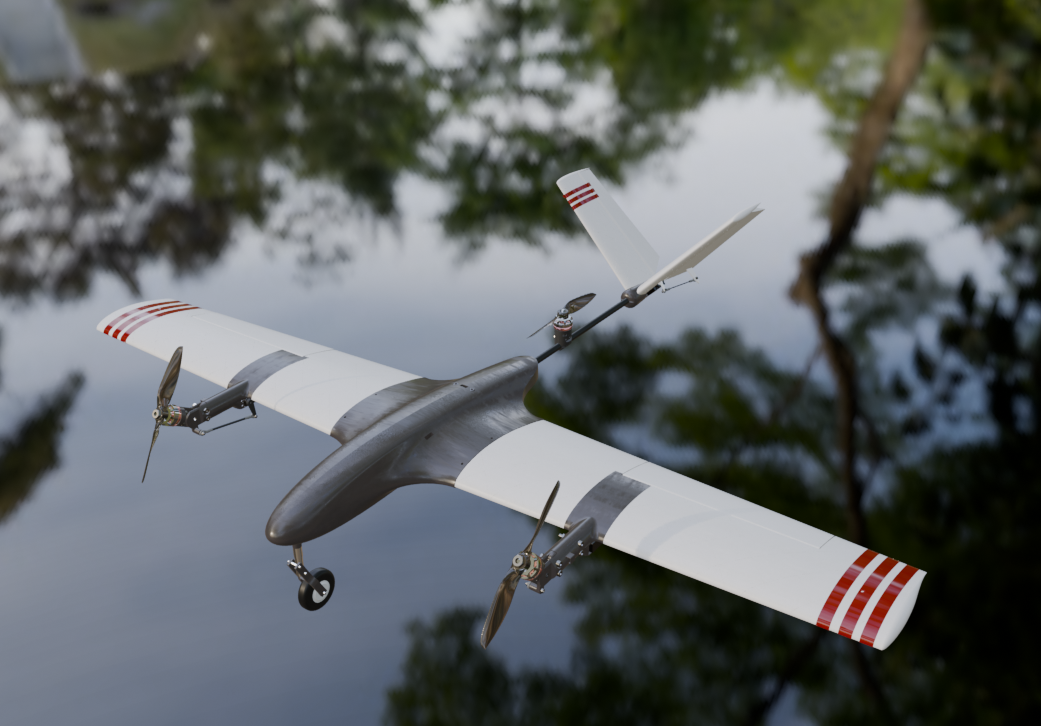
Aircraft Scale
1.2 m Wingspan · 0.89 m Length
Compact airframe designed for stable low-speed flight and VTOL transition.
Aerodynamic Design
0.18 m² Wing Area · 50 km/h Cruise
Optimized for controllability and efficient lift generation in low-speed flight.
Structural Architecture
Hybrid Monocoque + Internal Frame
3D printed aerodynamic shell paired with laser-cut wooden structure for strength and manufacturability.
Overview
Developed a hybrid VTOL aircraft for the SAE Aero Design Competition Advanced Class, capable of vertical takeoff and transition to fixed-wing flight.
The project required balancing aerodynamic performance, structural integrity, and manufacturability, resulting in a fully integrated aircraft platform capable of stable hover and transition flight.
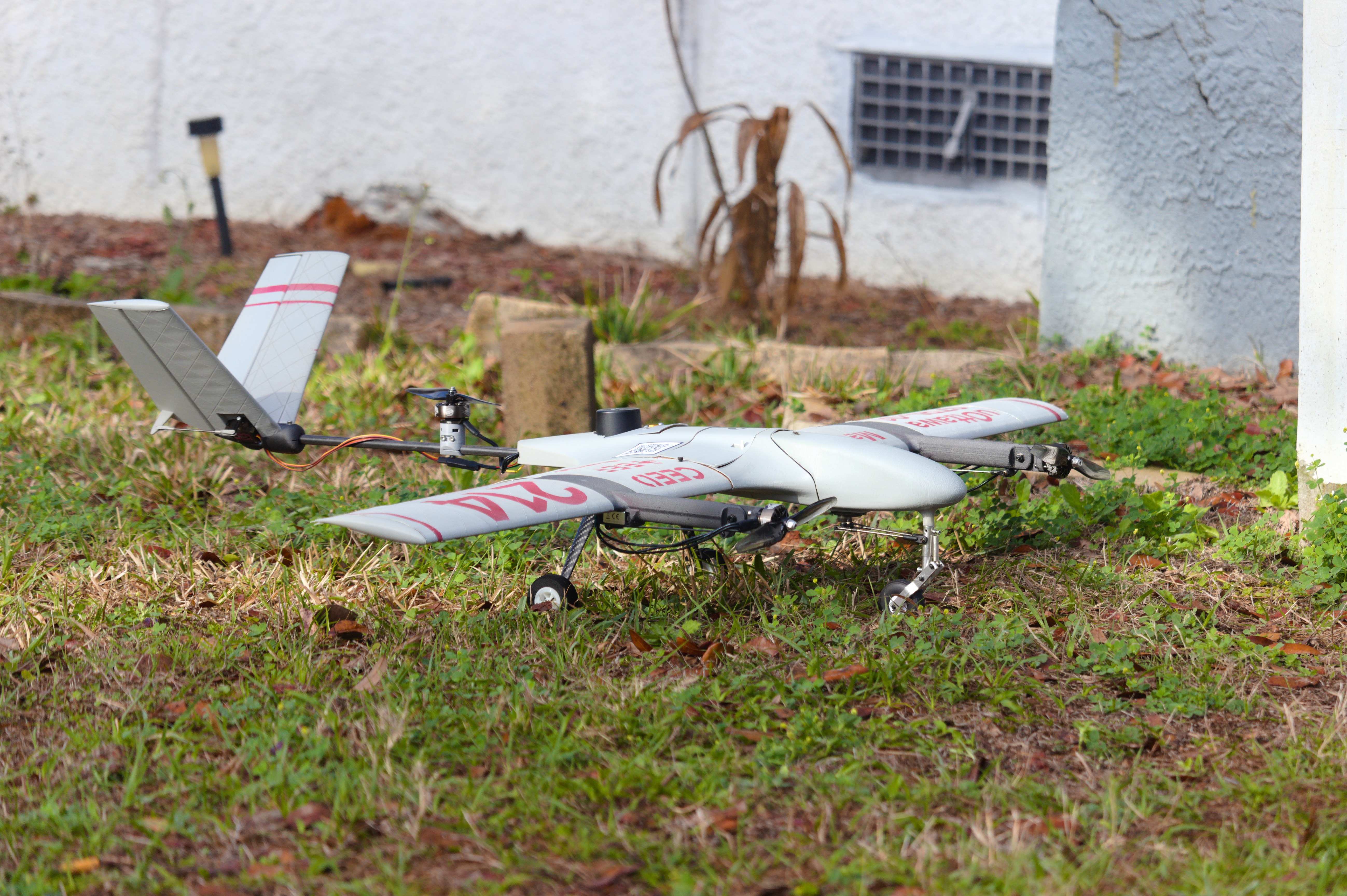
My Focus: Fuselage Design & CAD
Led the design of the aircraft fuselage, with additional contributions across overall aircraft configuration and system integration.
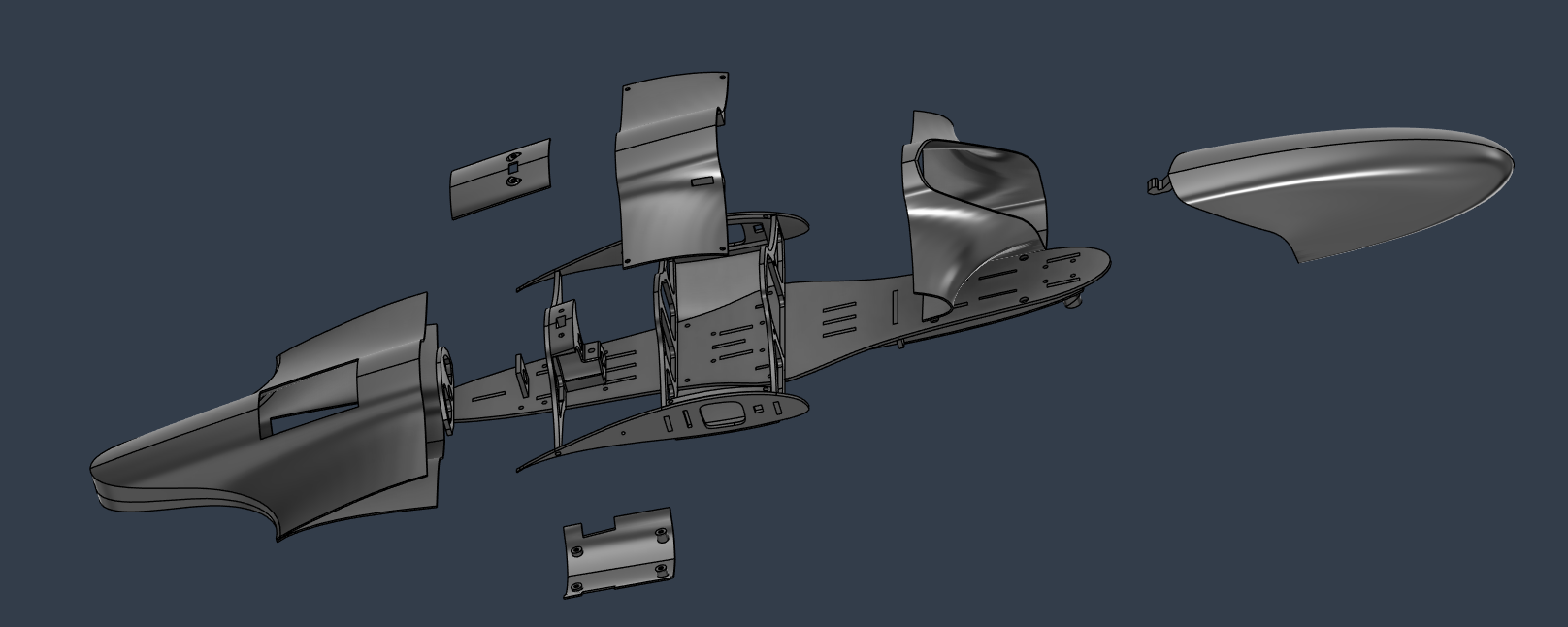
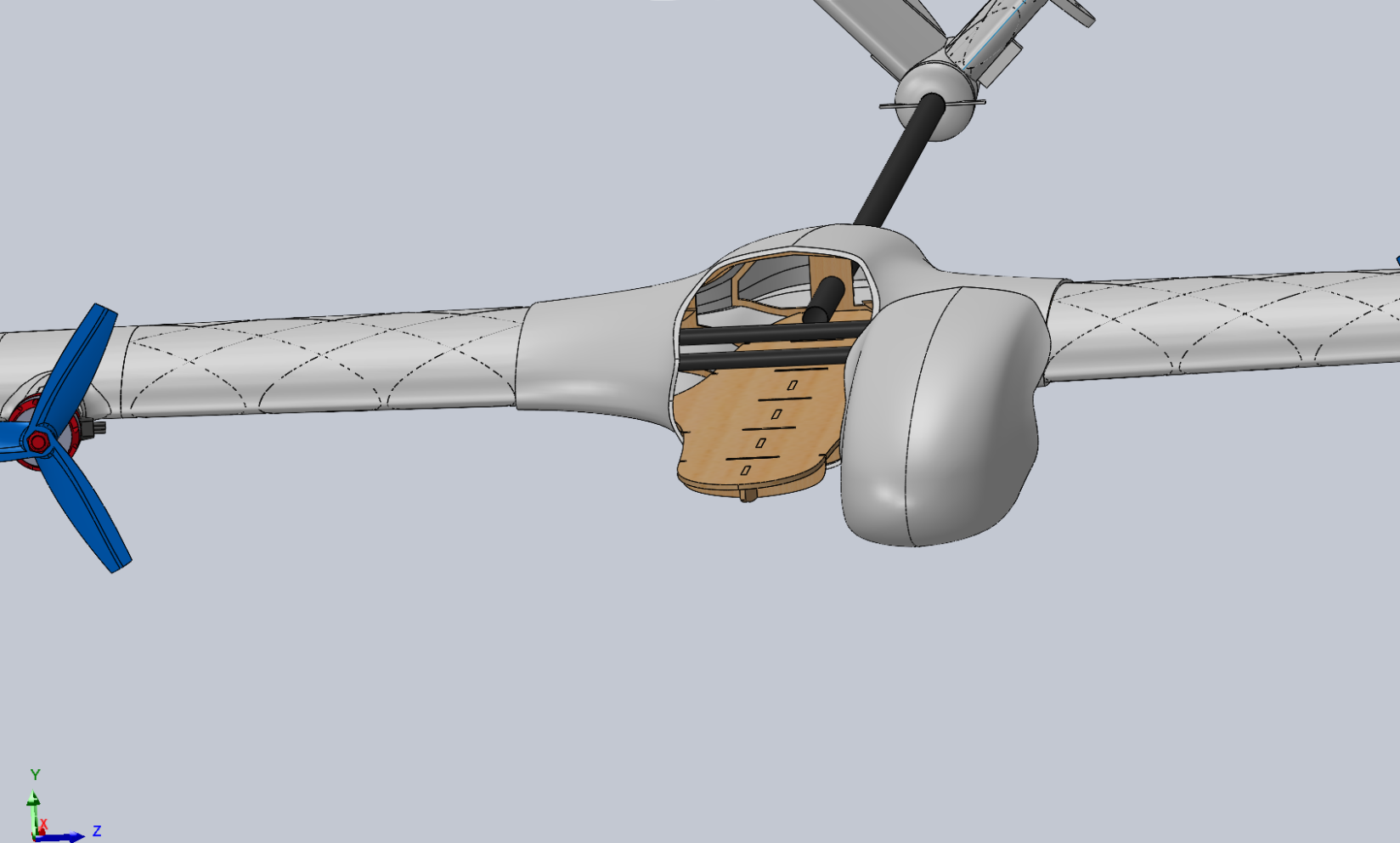
Designed a semi-monocoque fuselage to balance aerodynamic efficiency and structural strength. Developed internal structures to support load paths, mounting points, and subsystem integration. Designed geometry specifically for additive manufacturing, enabling rapid iteration and complex internal features. Integrated laser-cut wooden internal supports to improve rigidity while maintaining low weight.
The fuselage served as the central integration point of the aircraft, requiring careful coordination between mechanical, structural, and control system requirements.

Design Approach
Aerodynamic Monocoque Structure The fuselage was designed as a streamlined outer shell that contributes to both aerodynamic performance and structural load distribution, reducing drag while minimizing internal complexity.
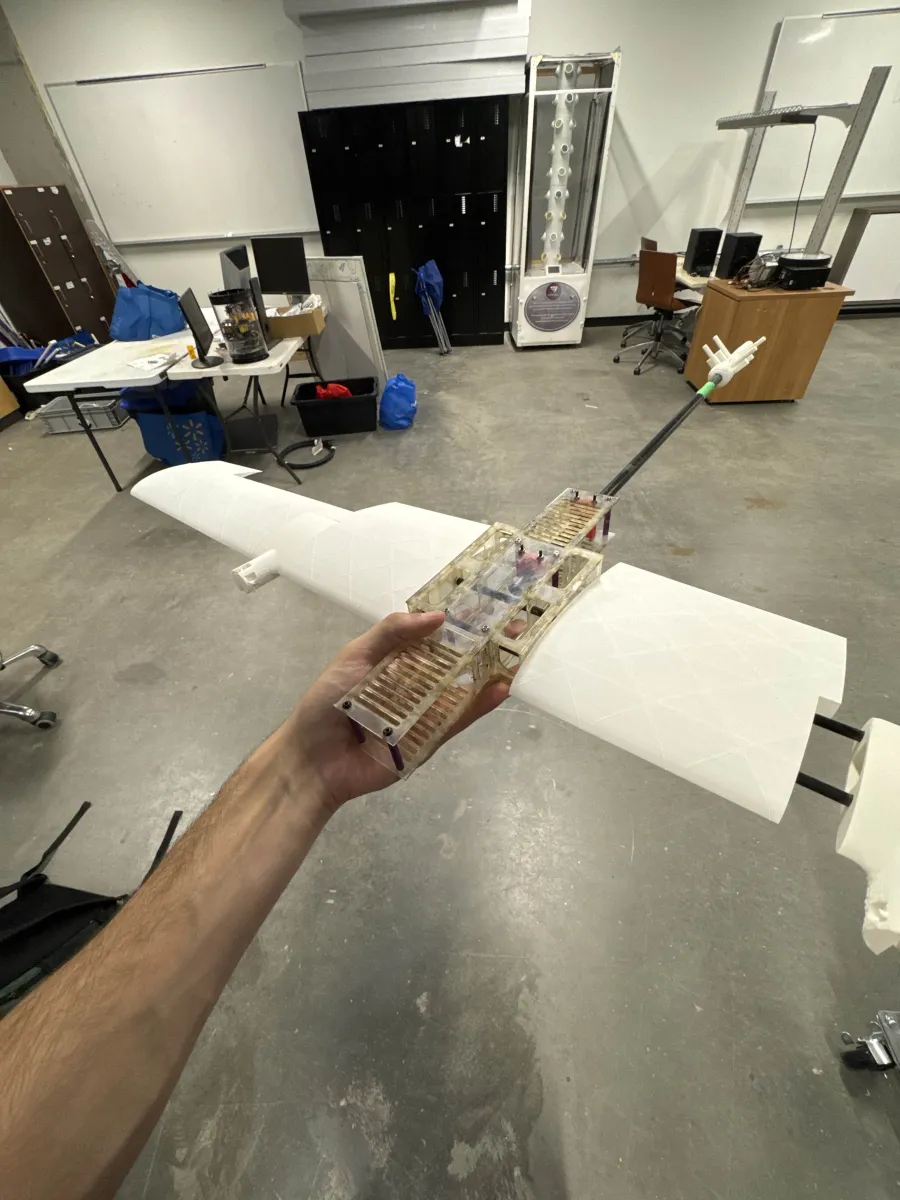
Hybrid Manufacturing Strategy A combination of 3D printed external geometry and laser-cut internal supports was used to balance manufacturability, strength, and iteration speed.
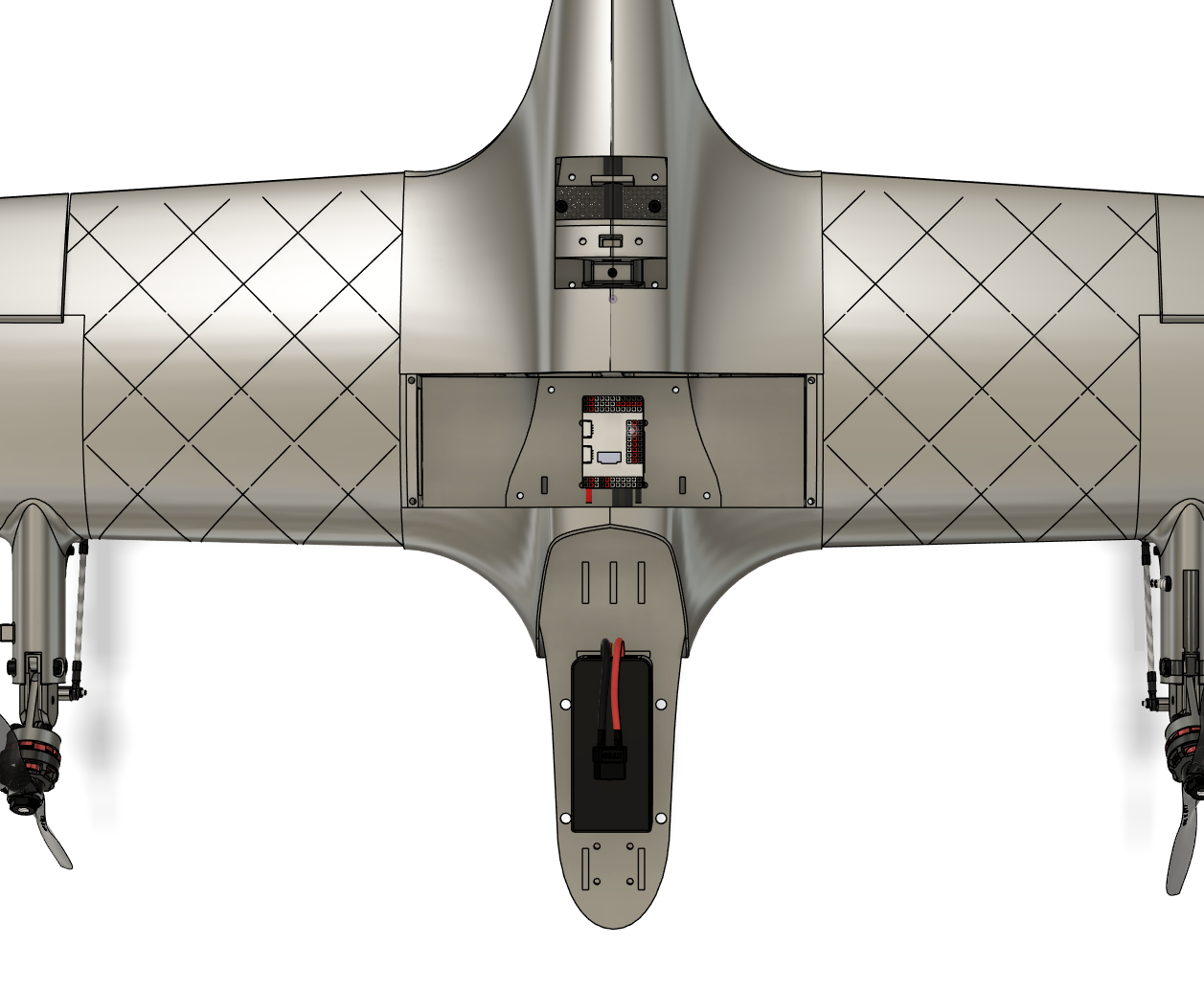
System Integration The fuselage was designed to house avionics, propulsion interfaces, and structural members within a constrained volume, requiring efficient spatial planning and accessibility.
Iterative CAD Development Multiple design iterations were performed to resolve integration conflicts, refine geometry, and ensure the final design could be reliably manufactured and assembled.
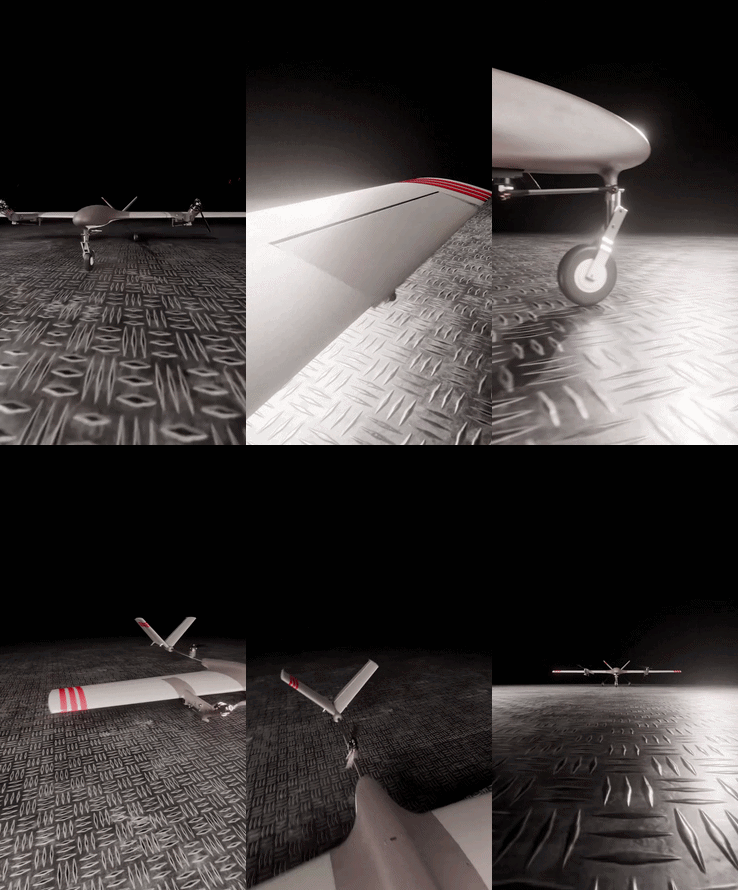
Results & Outcome
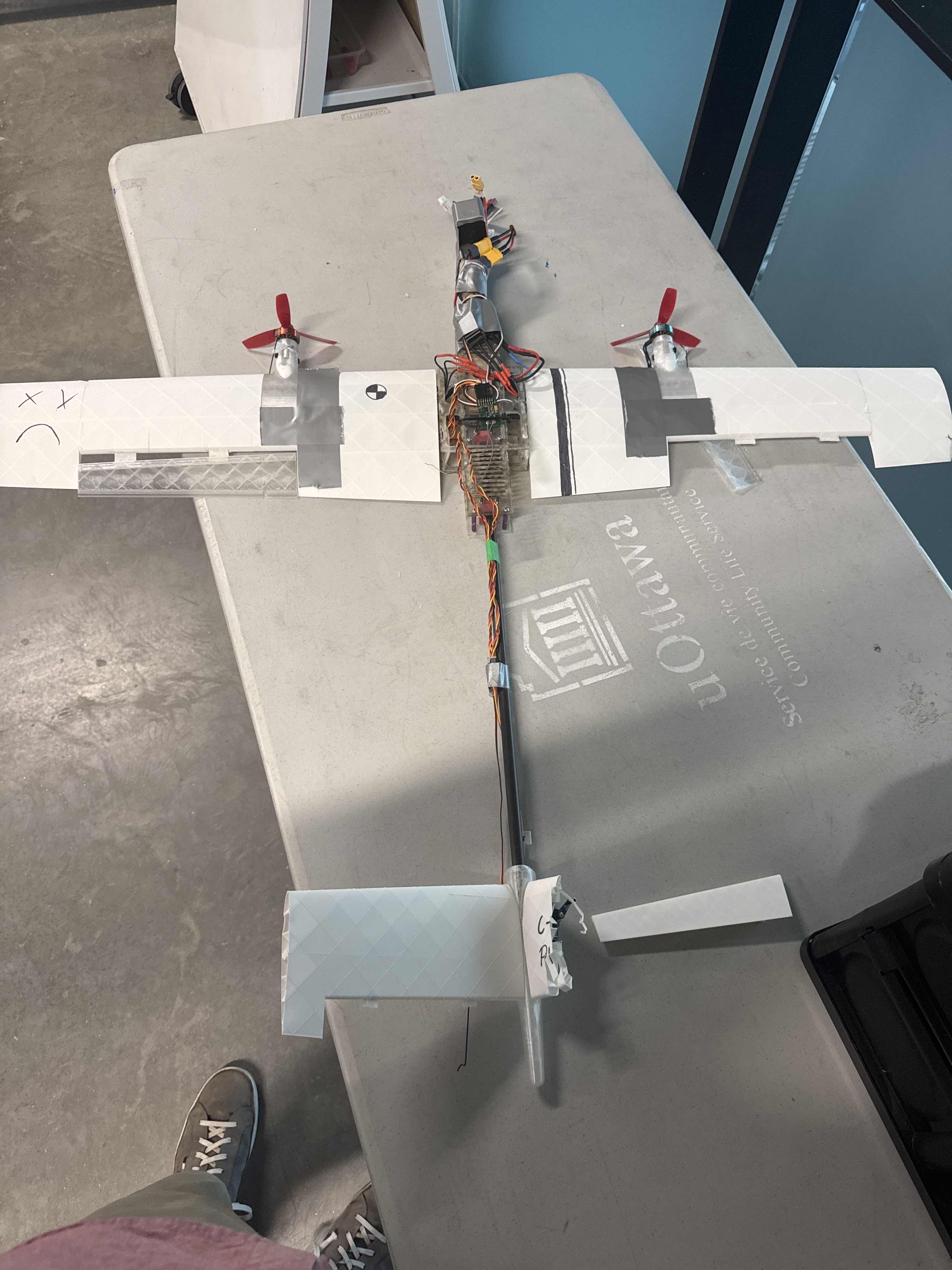
Delivered a fully integrated VTOL aircraft platform, contributing to successful hover and transition flight testing.
Validated key design decisions in fuselage structure, system integration, and manufacturability, resulting in a buildable and flight-capable airframe.
Established a strong foundation for future iterations and performance improvements within the team.
Project Gallery
Skills Demonstrated
• Airframe & Fuselage Design
• System Integration & Packaging
• CAD Modeling (Fusion 360 / SolidWorks)
• Design for Manufacturing (DFM)
• Additive & Hybrid Manufacturing
• Iterative Design & Testing